How to Bring Old Salon Customers Back Before the Next Busy Season
Your next customer may already be in your database. Learn how to identify inactive clients and bring old salon customers back before the next busy season.
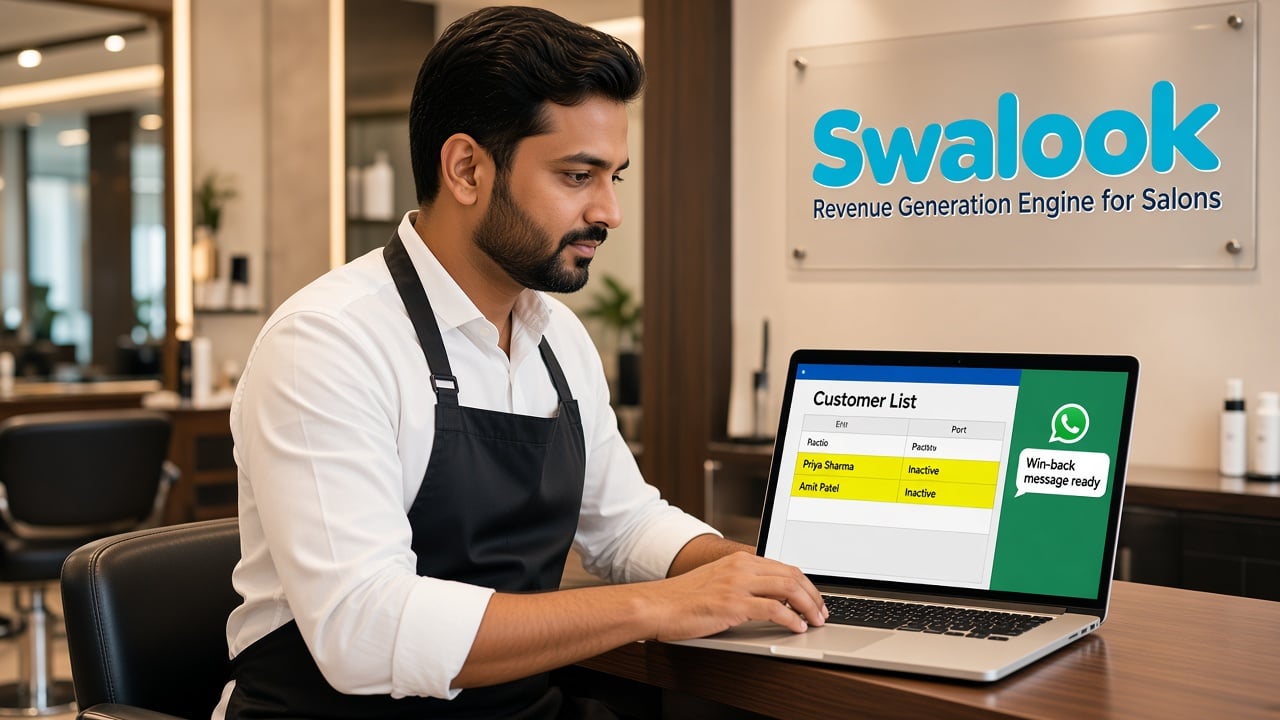
Salon owners often think about growth in terms of finding new customers. Run an advertisement. Post on Instagram. Get more Google enquiries. Offer a promotion. Ask for referrals. All of these can help. But there is another source of business sitting inside almost every established salon. Old customers. People who have already visited. People who already know the salon. People who may already trust a particular stylist. People who have already spent money there. And yet, many salons do very little with this information. A customer visits once, the bill is generated and then the relationship becomes inactive. Months pass. The salon waits for the customer to call again. The customer may eventually visit another salon. Not necessarily because they were unhappy. Sometimes they simply forgot. Life got busy. They moved. They had a wedding. They travelled. They had another salon appointment. They did not think about their next visit. This is why customer retention is not simply about giving discounts. It is about staying relevant.
Why customers stop coming back There is rarely one single reason. A customer may stop visiting because: They forgot They were busy They moved temporarily They tried another salon They were unhappy with one experience They no longer needed the service They did not receive any communication They felt the salon was too expensive They found another salon closer to home or work Their regular stylist left They simply did not think about booking again Some of these reasons are completely outside the salon’s control. But some are not. A salon cannot control whether a customer moves to another city. It can control whether the customer is remembered. It can control whether follow-ups are consistent. It can control whether customer history is available. It can control whether communication is relevant. And it can make it easier for a customer to return.
Your customer list is more valuable than a phone number list
Explore related Swalook features
Many salons have hundreds or thousands of customer phone numbers. But a list of phone numbers alone does not tell the owner much. Consider these two records. Customer A:Phone number only. Customer B:Name, contact details, previous visits, services taken, appointment history, billing history and customer activity. The second record gives the salon context. If Customer B has not visited for six months, that information can mean something. If the customer previously visited every four weeks, six months may be unusual. If the customer normally takes a particular service, the salon can communicate more intelligently. This is the difference between having customer data and actually using customer information.
Timing matters when bringing customers back
A common salon marketing mistake is contacting customers only when there is a promotion. For example: “20% OFF THIS WEEKEND!” The message goes to everyone. Some people ignore it. Some customers feel it is irrelevant. Others may have visited only recently and wonder why they received it. A better approach is to consider the customer’s situation. Imagine a customer who usually visits every five or six weeks. If they have not visited for a much longer period, the salon has a reason to reach out. The message can be simple: “Hi, we haven’t seen you in a while. Would you like us to help you plan your next appointment?” That feels very different from a mass advertisement.
A CRM helps identify customers who need attention
This is one of the practical reasons a salon CRM can be valuable. Instead of asking: “Which customers should we message today?” the salon can look at customer groups. For example: Due for a visit Customers whose normal visit pattern suggests they may be ready for another appointment. At-risk customers Customers whose activity has changed and who may be less likely to return. Dormant customers Customers who have not visited for a significant period. High-value customers Customers who have contributed significant business to the salon. Recent customers People who have visited recently and may need a future follow-up. The purpose is not to send more messages. The purpose is to sendmore relevant messages.
WhatsApp is already where many customers are
For Indian salons, WhatsApp can be a practical communication channel because customers already use it every day. But manual WhatsApp follow-up becomes difficult as the customer database grows. Imagine having 2,000 customers. The owner cannot personally remember when every customer is due. The front desk cannot manually check every customer every morning. Someone will be missed. This is where structured WhatsApp automation can help. The salon can configure workflows around customer activity and follow-up requirements. For example: Customer visit ↓ Customer history updated ↓ Customer reaches a relevant follow-up point ↓ WhatsApp communication ↓ Customer responds or books ↓ Next interaction recorded The exact workflow can depend on how the salon has configured its communication process. The important part is that customer follow-up becomes a system instead of depending entirely on memory.
But automation should still sound human
There is a difference between automated communication and robotic communication. A customer does not want to receive ten messages from a salon. They also do not want to receive the same generic promotion every week. Good automation should reduce unnecessary messages, not increase them. The communication should have a reason. For example: “Hi Riya, it’s been a while since your last hair appointment. If you’re planning a visit soon, we can help you find a suitable slot.” That is more natural than: “Dear valued customer, avail our exclusive limited-period offer today.” The first message sounds like a salon remembering the customer. The second sounds like a bulk marketing message. Humanisation matters even when the process is automated.
Different customers need different follow-ups
This is where customer segmentation becomes particularly useful. Suppose a salon has 1,000 inactive customers. It may be tempting to send the same message to all of them. But consider the difference between: Customer 1:Visited last month. Customer 2:Has not visited for four months. Customer 3:Has not visited for 18 months. Customer 4:Used to visit every month but suddenly stopped. Customer 5:Has made several high-value purchases. These customers should not necessarily receive identical communication. The fourth customer is particularly interesting. If someone used to visit regularly and suddenly stopped, the change itself may be worth attention. It does not automatically mean something went wrong. But it gives the salon a reason to look closer.
Old customers can be especially useful before festivals
The timing becomes even more important before major Indian occasions. Before: Navratri Durga Puja Diwali Wedding season Christmas New Year Regional festivals Major family occasions people often start thinking about grooming and salon services. This creates an opportunity to reconnect with customers who have gone quiet. For example: “Planning for Diwali? If you’d like to book your usual service, we can help you find a suitable slot.” This is more useful than waiting for the customer to remember the salon when every appointment slot is already occupied.
The goal is not to bring everyone back This is important. A salon does not need every inactive customer to return. Some customers have moved away. Some have changed their preferences. Some may no longer need the service. Some may have chosen another salon permanently. The objective is to identify customers who are reasonably likely to return and communicate with them appropriately. That is why customer segmentation matters. It also protects the salon from becoming overly dependent on mass messaging.
Look at what happened before the customer left Customer history can sometimes provide clues. Suppose a customer previously visited regularly. Then: Their visits became less frequent. They stopped booking. There were no further appointments. The owner can look at the customer’s history. Was there a complaint? Did the stylist change? Did the customer stop taking a particular service? Did the customer have several cancelled appointments? Did the customer simply stop returning? Not every question will have an answer. But having the history available is much better than guessing.
What if the customer responds? This is where many automated marketing systems become weak. Sending a message is not the end of the process. The salon needs to know what happens next. If the customer says: “Yes, I want an appointment Saturday.” Someone should be able to act on that. If they say: “Not this month.” the salon should not immediately treat them as a lost customer. If they say: “I moved to Gurgaon.” that tells the salon something different. If they say: “I was not happy with my last service.” that is valuable feedback. A good retention system therefore needs to connect communication with customer information and follow-up.
Win-back should not always mean discount Discounts can bring customers back. But they should not be the only tool. Suppose an old customer receives: “Come back and get 20% off.” They may return because of the price and leave again. Instead, the salon can reconnect based on the relationship. For example: “We haven’t seen you in a while. Would you like to book your usual service?” Or: “Planning a visit soon? We can check availability for you.” Or, for an appropriate customer: “We’ve added new options in the services you previously used. Would you like us to share the details?” The objective is to remind the customer that the salon is still there.
Retention can improve the economics of salon growth Every new customer requires effort. The salon may spend money on: Google advertising Meta advertising Content Offers Staff time Lead follow-up Then the customer has to decide whether to book. An existing customer has already crossed many of those barriers. They know the location. They have experienced the salon. They know the staff. They may already trust the business. That does not mean every old customer will return. But it does mean the salon should not ignore its existing customer base while constantly searching for new people. A healthy salon growth strategy needs both: Acquisition + Retention New customers enter. Existing customers return. That creates a stronger cycle.
How Swalook can help with customer win-back
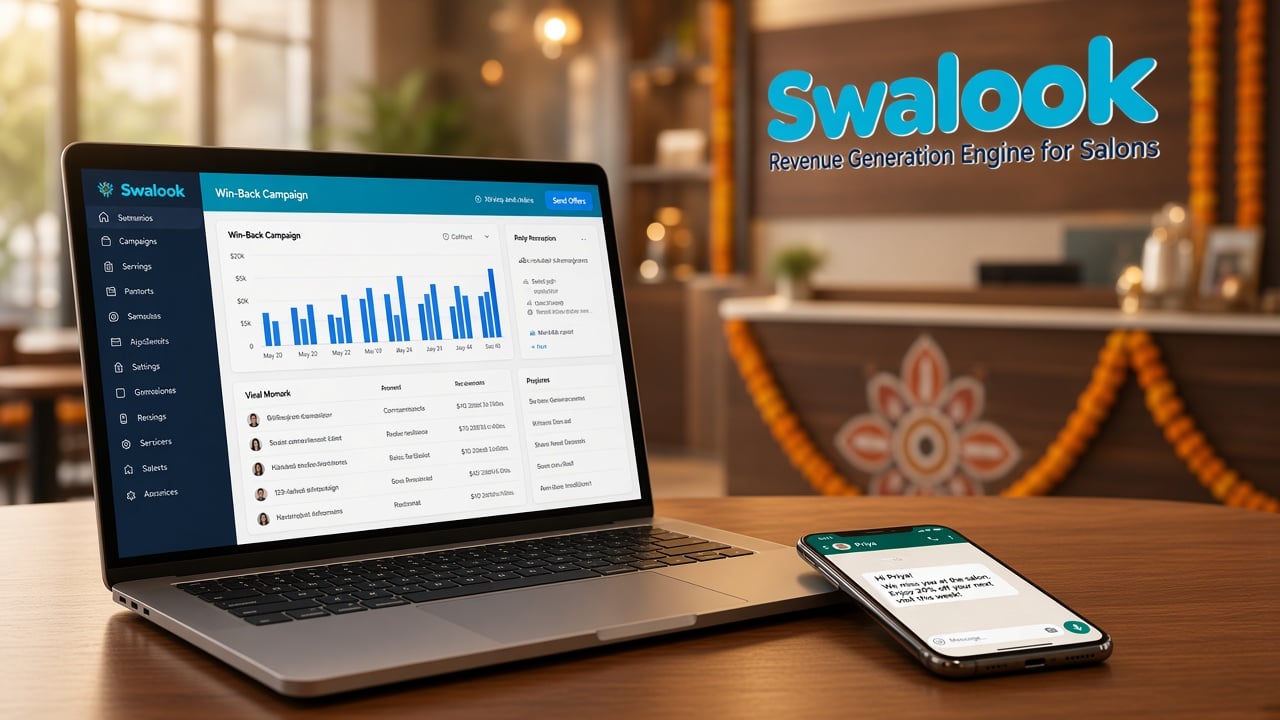
Swalook’s CRM is designed around customer information and activity. It can help the salon maintain customer profiles, visit history, service history, spending information and customer segments. This allows the salon to identify customer groups such as customers due for a visit, at-risk customers and dormant customers. The salon can then use structured follow-up workflows and WhatsApp communication to stay connected with customers. This is particularly useful when the owner does not have time to manually check thousands of records. Instead of asking the team to remember: “Who needs a call today?” the system can help surface customers who need attention. That turns retention from a random activity into part of normal salon operations.
Connect retention with acquisition
There is another important reason to think about old customers. A salon should know what happens to people acquired through advertising. Suppose a customer first comes through a Meta campaign. They book an appointment. They visit. They receive a service. If the salon only measures the first transaction, it may underestimate the value of that customer. The customer may return several times. They may buy a membership. They may refer a friend. They may become a high-value customer. That means acquisition and retention should not be treated as completely separate activities. The journey is: Advertisement ↓ New customer ↓ First visit ↓ Customer history ↓ Follow-up ↓ Second visit ↓ Long-term relationship This is one of the reasons connecting marketing and CRM data is useful.
The owner should be able to see more than the total number of customers A salon owner may say: “We have 3,000 customers.” That sounds impressive. But the more useful questions are: How many are active? How many have not visited recently? How many are due for a visit? How many customers returned after their first visit? Which customers are high value? Which services are most frequently purchased? Which customers have become inactive? How many new customers came from marketing? How many returned? These questions turn a customer database into a business tool.
A simple old-customer win-back process
A salon can build a practical process around five stages.
- Identify
Find customers who are inactive, due for a visit or showing reduced activity.
- Segment
Separate customers based on history, service, activity and value.
- Contact
Use relevant WhatsApp or other configured communication workflows.
- Respond
Make sure enquiries and replies reach the right person.
- Continue the relationship
Once the customer returns, do not let the relationship become inactive again. This last step is often ignored. A win-back campaign should not be a one-time activity.
The best time to win back a customer is before you desperately need customers
Many salons start marketing only when the calendar becomes empty. By then, they are under pressure. Instead, customer retention should be continuous. Before a festival, reconnect with relevant customers. Before wedding season, identify customers who may need services. Before New Year, contact customers who may be preparing for parties. During quieter periods, work on dormant customers. The salon then becomes less dependent on last-minute promotions.
Your database should work while you run the salon The owner already has enough responsibilities. There are staff issues. Customers. Suppliers. Bills. Inventory. Appointments. Payments. Marketing. Complaints. Branch management. The owner should not have to personally remember every customer who needs a follow-up. That is exactly where technology becomes useful. The role of salon software should not be to create more work. It should help the owner see what needs attention. For customer retention, that means making the right customers visible at the right time.
Bringing customers back is not about chasing them
There is a difference between follow-up and chasing. Chasing means repeatedly sending messages without understanding why the customer has not responded. Follow-up means communicating when there is a genuine reason. The salon remembers the customer. The salon understands their previous relationship. The message is relevant. The customer can decide whether they want to return. That is a healthier approach to retention.
The salon that remembers customers has an advantage Customers have many choices today. A salon may not be the cheapest. It may not have the biggest Instagram following. It may not have the largest advertisement budget. But remembering customers can still make a difference. When a salon knows: “When did this customer last visit?” “What did they take?” “Are they due for another appointment?” “Have they stopped visiting?” “Should someone follow up?” the business becomes more proactive. That is the real value of customer retention technology. Not sending more messages. Not giving endless discounts. Not chasing every old customer. Knowing which customers matter, when they need attention, and what the salon should do next. For an Indian salon preparing for another festival, wedding season or busy period, some of the next customers may already be sitting inside the database. The opportunity is to find them, understand them and give them a reason to come back. Related Swalook pages:Salon CRM, Customer Retention, WhatsApp Marketing, Loyalty Program, Membership, Customer Acquisition, Salon Analytics. Suggested CTA:Book a Demo
Frequently Asked Questions
Why do salon customers stop coming back?
Customers may stop returning for many reasons. They may forget about the salon, change their routine, move to another salon, feel that nobody followed up with them, or simply not have a reason to book again. The important point is that not every inactive customer is a lost customer.
How can a salon bring back old customers?
Start by identifying inactive customers and understanding their previous visit history. The salon can then send relevant, timely follow-ups instead of generic promotional messages. Reminders, service recommendations, seasonal campaigns and membership offers can all be useful when matched to the customer's situation.
How often should a salon contact inactive customers?
There is no universal frequency. Communication should depend on the customer's previous service, expected visit cycle and engagement. Sending excessive messages can annoy customers, while never following up means the salon may lose customers who would have returned with a simple reminder.
What is a salon win-back campaign?
A win-back campaign is a structured effort to reconnect with customers who have not visited the salon for a period of time. Instead of treating every inactive customer the same way, salons can segment customers and communicate with them based on their previous visits and likely needs.
Can WhatsApp be used for customer win-back?
Yes. WhatsApp can be used to send personalized follow-ups, reminders and relevant offers to existing customers. Automation allows salons to manage larger customer groups without manually contacting every customer.
Is it better to find new customers or bring back old ones?
A healthy salon needs both acquisition and retention. New customers help the salon grow, while existing customers can create repeat revenue over time. The important thing is to measure both rather than focusing only on how many new customers a campaign generates.
You may also like
Bring inactive customers back with Swalook CRM
See how Swalook helps Indian salons manage customers, bookings, marketing and growth in one place.
Talk to Swalook