Salon Business Owner’s Monthly Checklist: 30 Numbers You Should Actually Track
Most salon owners know their monthly sales. But sales alone do not tell the full story.
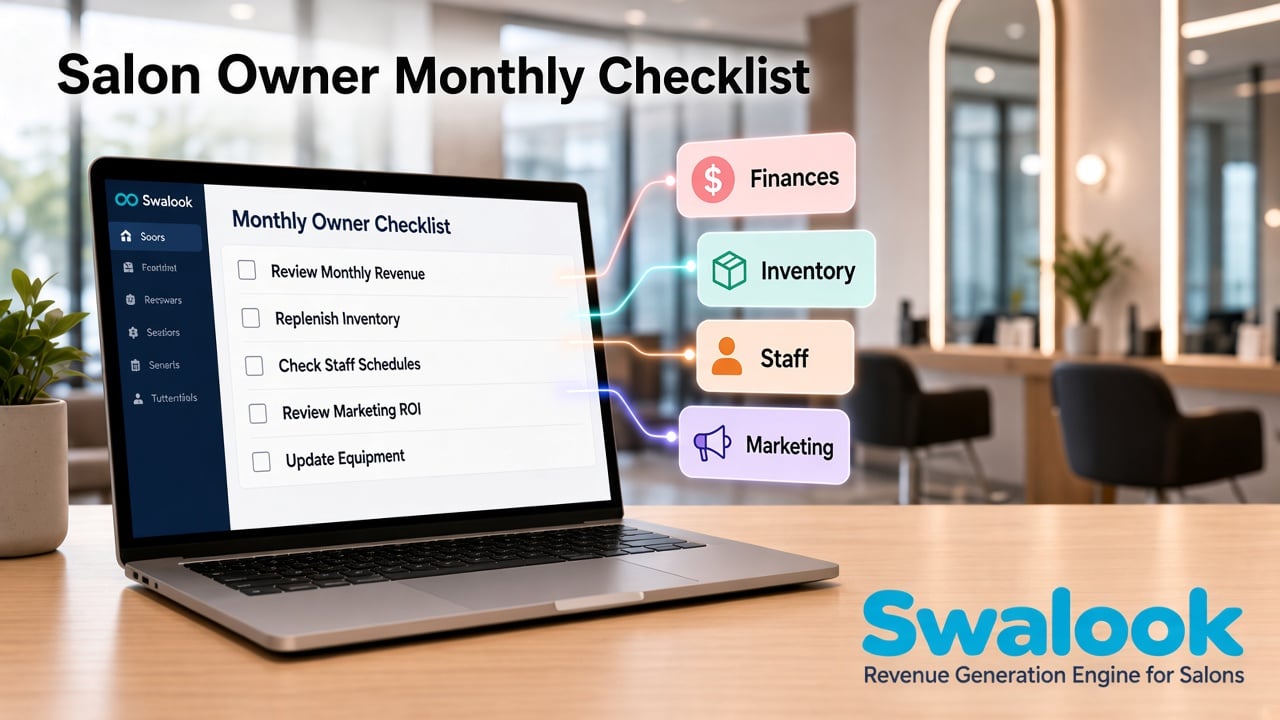
Most salon owners know their monthly sales. But sales alone do not tell the full story. You can have a good revenue month and still have: More no-shows. Fewer repeat customers. Higher staff costs. More inventory wastage. Poor marketing conversion. Falling customer retention. A better monthly review looks at several parts of the business together. Here is a practical 30-point checklist. Revenue

1. Total revenue
How much did the salon generate this month?
2. Revenue compared with last month
Did revenue increase or decrease?
3. Average bill value
Average Bill Value = Total revenue ÷ Number of completed transactions This tells you how much the average customer spends per transaction.
4. Service revenue
How much revenue came from services?
5. Retail product revenue
If your salon sells products, track this separately. Customers
6. New customers
How many people visited for the first time?
7. Repeat customers
How many customers returned?
8. First-to-second visit conversion
How many first-time customers eventually came back?
9. Dormant customers
How many existing customers have stopped visiting?
10. High-value inactive customers
How many customers with significant previous spending are currently inactive? This can be a useful retention list. Appointments
11. Total appointments
How many appointments were scheduled?
12. Completed appointments
How many actually happened?
13. Cancellations
How many appointments were cancelled?
14. No-shows
How many customers did not arrive?
15. Empty slots
Where did appointment capacity go unused? This is particularly useful for understanding revenue leakage. Marketing
16. Marketing spend
How much did you spend on Google, Meta and other channels?
17. Leads
How many enquiries did marketing generate?
18. Bookings from leads
How many leads became appointments?
19. Customers acquired
How many new customers actually visited?
20. Revenue from acquired customers
What revenue came from those customers? Do not stop at clicks. Retention
21. Customers due for another visit
How many customers are likely due based on their service history?
22. Win-back contacts
How many inactive customers were contacted?
23. Win-back bookings
How many responded and booked?
24. Membership renewals
How many memberships expired and how many were renewed?
25. Package usage
How many packages are active, nearly completed or expired? Staff
26. Attendance
Look for repeated late arrivals, absences and staffing gaps.
27. Revenue by staff member
This should be interpreted carefully and in context.
28. Commission
Review commission calculations before payout. Inventory
29. Low-stock items
Which important products need attention?
30. Slow-moving or excess inventory
Which products are sitting without meaningful movement? Turn this into a monthly owner meeting At the end of the month, do not just look at the numbers. Ask: What changed? Why did it change? What needs attention? What should we stop doing? What should we repeat? What should we automate? This turns reporting into management. Example Imagine revenue increased by 12%. That sounds good. But then you notice: Repeat customers fell. New customer acquisition increased. Marketing spend increased by 35%. No-shows increased. Average bill value increased. Now the story is different. The salon may be growing through acquisition but becoming weaker in retention. That is exactly why one number is not enough. What if you have multiple branches? Run the same checklist by branch. Compare: Revenue. Average bill. Repeat customers. No-shows. Marketing leads. Staff productivity. Inventory. This can help the owner identify where management attention is needed.
Build an owner dashboard
You do not need 100 charts.
Start with a few numbers that answer:
How much did we make? How many customers came? Did they come back? Where are we losing appointments? Which marketing brought customers? Where is staff or inventory performance changing? That is enough to start.
Frequently Asked Questions
What KPIs should a salon track?
Revenue, average bill value, new customers, repeat customers, bookings, cancellations, no-shows, lead conversion, marketing spend, membership renewals, staff performance and inventory are useful starting points.
What is the most important salon KPI?
There is no single number.
Revenue matters, but repeat visits, average bill value, customer acquisition and appointment utilisation provide important context. How often should a salon review its numbers?
Daily monitoring can help with operations, while a monthly review is useful for understanding trends and making management decisions.