Is Your Salon Actually Growing? 12 Numbers Every Salon Owner Should Track Every Week
A salon can be busier without becoming more profitable. These 12 numbers help salon owners understand whether the business is actually growing.
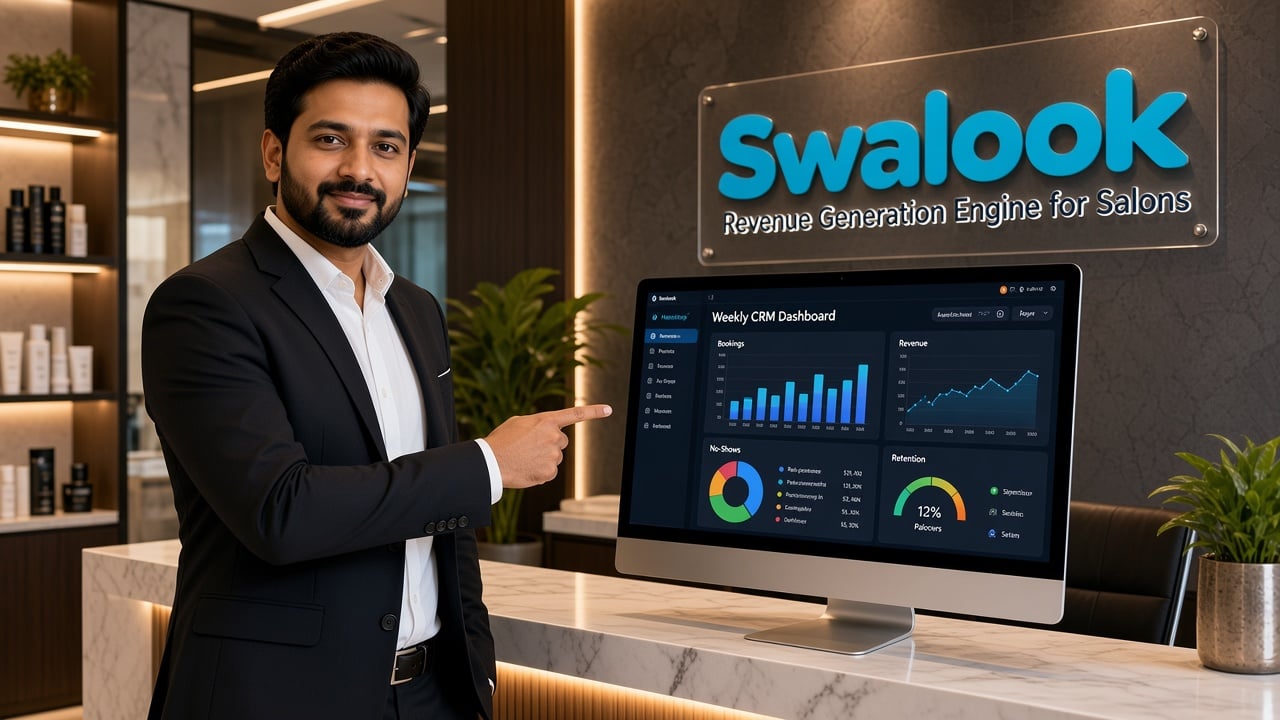
Is Your Salon Actually Growing? A salon can be busy and still not be growing. You can have more bookings this month. More customers walking through the door. More staff working. More bills being generated. And still end the month with less money. That is why salon owners need to distinguish between activity and growth. Activity tells you what happened. Business metrics help you understand why it happened. For a salon owner, this does not mean sitting with complicated spreadsheets every evening. You need a small set of numbers that answer practical questions: Are customers returning? Is revenue increasing? Are bills getting larger? Are staff productive? Are your services performing? Are marketing activities generating business? Are you losing customers? Are branches improving? This article explains 12 numbers worth tracking every week.

- Total Revenue
Start with revenue. It is not the only number that matters, but it gives you the overall picture. Track: Daily revenue Weekly revenue Monthly revenue Revenue by branch Revenue by service category Then compare it with previous periods. For example: This week: ₹1,50,000Previous week: ₹1,35,000 That is an increase. But do not immediately conclude that the business is healthier. You need to understand what caused the increase. Was it more customers? Higher bills? A seasonal rush? A promotion? A large number of prepaid packages? That leads to the next metrics.
Explore related Swalook features
- Number of Bills
Track the number of completed transactions. Suppose: Week 1: 300 billsWeek 2: 300 bills But revenue increased from ₹1,50,000 to ₹1,80,000. That tells you something important. The salon did not necessarily become busier. Customers may simply have spent more per visit.
- Average Bill Value
Calculate: Total revenue ÷ number of bills If you generate ₹1,80,000 from 300 bills: Average bill = ₹600 This is one of the easiest metrics for an owner to understand. If the average bill is falling, investigate why. Possible reasons include: More low-value services More discounts Lower service mix Fewer premium services Customer behaviour changes If it rises, identify what changed.
- New Customers
Track how many genuinely new customers visited. This tells you whether your acquisition activity is producing new business. But be careful. A new customer is valuable only if the customer relationship continues. A salon that brings in 100 new customers but loses 90 of them may have an acquisition problem and a retention problem. New customer numbers should therefore never be viewed alone.
- Returning Customers
This is one of the most important numbers for a salon. How many customers who have already visited your salon came back? Track: Returning customers Repeat visits Repeat visit rate Time between visits A salon with a healthy base of returning customers has a different business foundation from a salon that constantly has to replace lost customers with new ones.
- Customer Recency
Do not only ask: “Who visited?” Also ask: “Who has not visited recently?” This creates a completely different view of your business. A customer who visited 20 days ago may be active. A customer who normally visits every month but has not visited for three months may need attention. A customer who has not visited for a year is a different segment. Customer recency helps owners understand the health of their existing customer base.
- Service Mix
Track revenue by service category. For example: Hair Skin Beauty Nails Spa Bridal Retail Then compare the mix over time. A salon may discover that one category is growing while another is declining. This can influence: Staff training Inventory Marketing Pricing Packages Memberships
- Staff Revenue
Track revenue associated with staff performance where appropriate. This should not be used simply as a way to rank employees. It can help answer: Which staff members are heavily booked? Which have unused capacity? Which services do they perform? What is their average bill? Where is additional training required? Is staff scheduling aligned with demand? The objective is better utilization, not simply pressure.
- Chair Utilization
Your chairs represent capacity. If you have 10 chairs but only a few are occupied during most operating hours, you have unused capacity. If all chairs are occupied during certain hours but empty at others, you may have a scheduling problem rather than a pure customer acquisition problem. Track: Available capacity vs used capacity This can help with staffing, scheduling and marketing decisions.
- Discount Rate
Discounting can quietly reduce profitability. Track: Total discount value ÷ total menu value For example, if the salon gives ₹40,000 in discounts against ₹4,00,000 of menu-value sales, that is a significant amount of potential revenue given away. Discounts are not automatically bad. They can be useful for: New customer acquisition Seasonal campaigns Memberships Specific services Customer recovery But the owner should know the financial impact.
- Marketing-to-Revenue Relationship
Do not ask only: “How much did we spend on marketing?” Ask: “What business did that spending generate?” For example: Marketing spend: ₹20,000New enquiries: 150Bookings: 50Completed visits: 40Revenue from those customers: ₹60,000 That tells a much more useful story. Google’s own documentation emphasizes conversion measurement because it allows advertisers to connect interactions such as clicks with meaningful actions such as sales or leads. For a salon, the principle is simple: Marketing should ultimately be connected to business outcomes.
- Customer Lifetime Value
The final number is harder to calculate but extremely valuable. Customer lifetime value asks: How much revenue does an average customer generate over the relationship with the salon? Imagine a customer spends: ₹800 on the first visit. Then: ₹900₹1,000₹850₹1,200 Over multiple visits, that customer is worth considerably more than the first ₹800 transaction. This changes how you think about acquisition. A customer should not be evaluated only by the first bill.
The Numbers Should Be Connected
The real value comes from connecting these metrics. Imagine: New customers increased by 20%. That sounds positive. But: Returning customers decreased by 15%. Average bill decreased by 10%. Discounts increased by 30%. Now the picture is different. The salon is acquiring more people but may not be improving the quality of its customer base or profitability. This is why one number is rarely enough.
A Simple Weekly Salon Dashboard Your weekly dashboard can be as simple as: Metric This Week Previous Week Revenue
Bills
Average Bill
New Customers
Returning Customers
Inactive Customers
Service Revenue
Staff Revenue
Chair Utilization
Discounts
Marketing Spend
Attributed Revenue
The exact numbers will vary by salon. The important thing is consistency.
Why Weekly Tracking Is Better Than Waiting for Month-End
By the time a monthly report shows a problem, several weeks may already have passed. Weekly tracking creates an early warning system. For example: Week 1: Returning customers decline. Week 2: Average bill declines. Week 3: Revenue declines. A monthly review may show only the final result. Weekly tracking gives the owner a chance to investigate earlier.
Don’t Turn Your Dashboard Into a Wall of Numbers
More data does not automatically mean better management. A dashboard with 50 metrics can become useless if the owner does not know what to do with them. Start with a small number of meaningful metrics. The question should always be: What decision does this number help me make? If a number does not influence a decision, it may not deserve to be on the main dashboard.
The Difference Between Reporting and Intelligence Reporting says: Revenue was ₹6 lakh. Business intelligence asks: Why was revenue ₹6 lakh? Reporting says: 500 customers visited. Intelligence asks: How many were new, how many returned, and how many are now inactive? Reporting says: ₹30,000 was spent on marketing. Intelligence asks: Which activity generated customers and which customers actually generated revenue? That second level of thinking is where technology becomes useful.
What Salon Owners Should Be Able to See in One Place
A useful salon management platform should make it easier to connect: Customer with Visit with Service with Bill with Staff with Revenue with Marketing with Future customer behaviour When these pieces are separated, owners often end up making decisions from incomplete information.
How Swalook Approaches This
Swalook is built around the idea that salon software should do more than record appointments and print bills. The CRM is the foundation. Customer information becomes more valuable when it can be connected to customer behaviour, visits, retention, revenue and salon operations. That allows the salon owner to move from: “What happened today?” to: “What is happening in my business, and what should I do next?” That is a much more useful way to manage a salon.
A Weekly 20-Minute Review for Salon Owners At the end of every week, ask these questions:
- Did revenue increase or decrease?
- Did the number of bills increase or decrease?
- Did the average bill change?
- How many new customers came?
- How many existing customers returned?
- Who has become inactive?
- Which services performed best?
- Where was staff capacity underused?
- Did discounting increase?
- What did marketing actually generate?
- Which customers should be contacted next?
- What is the one business problem that needs attention next week?
That last question is important. A dashboard should lead to action.
Final Takeaway
A growing salon is not simply one with more customers. It is a salon where the owner can see what is happening and make better decisions because of that visibility. Revenue matters. Customer acquisition matters. Repeat visits matter. Average bills matter. Staff utilization matters. Service mix matters. Marketing matters. But the real advantage comes from connecting these numbers. If you track the right metrics every week, problems become visible earlier. You can see when customers stop returning. You can see when average bills decline. You can see when a branch starts underperforming. You can see when discounts become excessive. You can see which services are working. And most importantly, you can act before a small problem becomes a major revenue problem. A salon does not become more profitable simply because it becomes busier. It becomes stronger when the owner understands what the business is actually doing.
CTA Stop Managing Your Salon Only From the Billing Screen Billing tells you what was sold. Swalook helps you look at the bigger picture, from customer relationships and retention to revenue and salon operations. Get a clearer view of your salon business with Swalook.
Frequently Asked Questions
What are the most important salon KPIs?
Important salon KPIs include revenue, number of bills, average bill value, new customers, returning customers, customer recency, service mix, staff revenue, chair utilization, discounts, marketing performance and customer lifetime value. How often should a salon owner check business metrics? A weekly review is useful for operational decision-making, while a monthly review can provide a broader financial and strategic view. Why is average bill value important for salons? Average bill value helps owners understand how much customers spend per transaction. It can reveal changes in service mix, discounting and customer spending behaviour. How can a salon measure customer retention? Track returning customers and compare them with customers who visited previously. It is also useful to track how frequently customers return and how long they remain inactive. How can salon owners know whether marketing is working? Connect marketing activity with measurable outcomes such as enquiries, bookings, completed visits and revenue. Conversion measurement helps connect advertising interactions with meaningful business actions. Should every salon track the same KPIs? No. The basic metrics can be similar, but the most important KPIs depend on the salon’s size, service mix, business model, number of branches and goals.
You may also like
See your salon numbers clearly with Swalook
See how Swalook helps Indian salons manage customers, bookings, marketing and growth in one place.
Book a Demo